
Consultation:
OXFORD CITY COUNCIL LOCAL PLAN 2042 – DRAFT DOCUMENT FOR CONSULTATION (REGULATION 18), JUNE 2025
Our Response:
August 2025
Oxford Preservation Trust welcome the opportunity to review and provide comments on the Oxford Local Plan 2024 Draft Document for Consultation (Regulation 18).
The Trust was established in 1927 as a charity and local amenity society with the principal aim of conserving and enhancing Oxford and its setting. We take a forward-thinking and positive approach to development, looking to influence change rather than stopping it, preserving the best of the old and encouraging the best of the new. We are committed to ensuring that Oxford can continue to flourish and prosper, whilst protecting its historic character and setting.
We also own and look after 1000 acres of land in and around Oxford making green space available for local people to benefit from and enjoy. Protecting and enhancing green spaces within and around the city is one of our top priorities.
The Trust has detailed knowledge and expertise built up over a number of years so that it is recognised as a professional and experienced voice. We focus our comments on matters relating to landscape, views and the impact of development on the City of Oxford and its heritage, and on its green setting and surrounds.
We have reviewed the draft Local Plan and its supporting documentation and evidence. We have seven key areas that are relevant to our planning and heritage work, these areas are:
1. Heritage;
2. Green setting;
3. Protecting views in and out of the city;
4. Improving and protecting the public realm;
5. Impacts of tourism;
6. Access to green spaces and connectivity between them;
7. Providing housing within city and district centres.
In terms of our comments on the local plan, they are guided by the above areas and are set out in more detail below:
Figure 1.2 The six Local Plan 2042 themes and underlying objectives
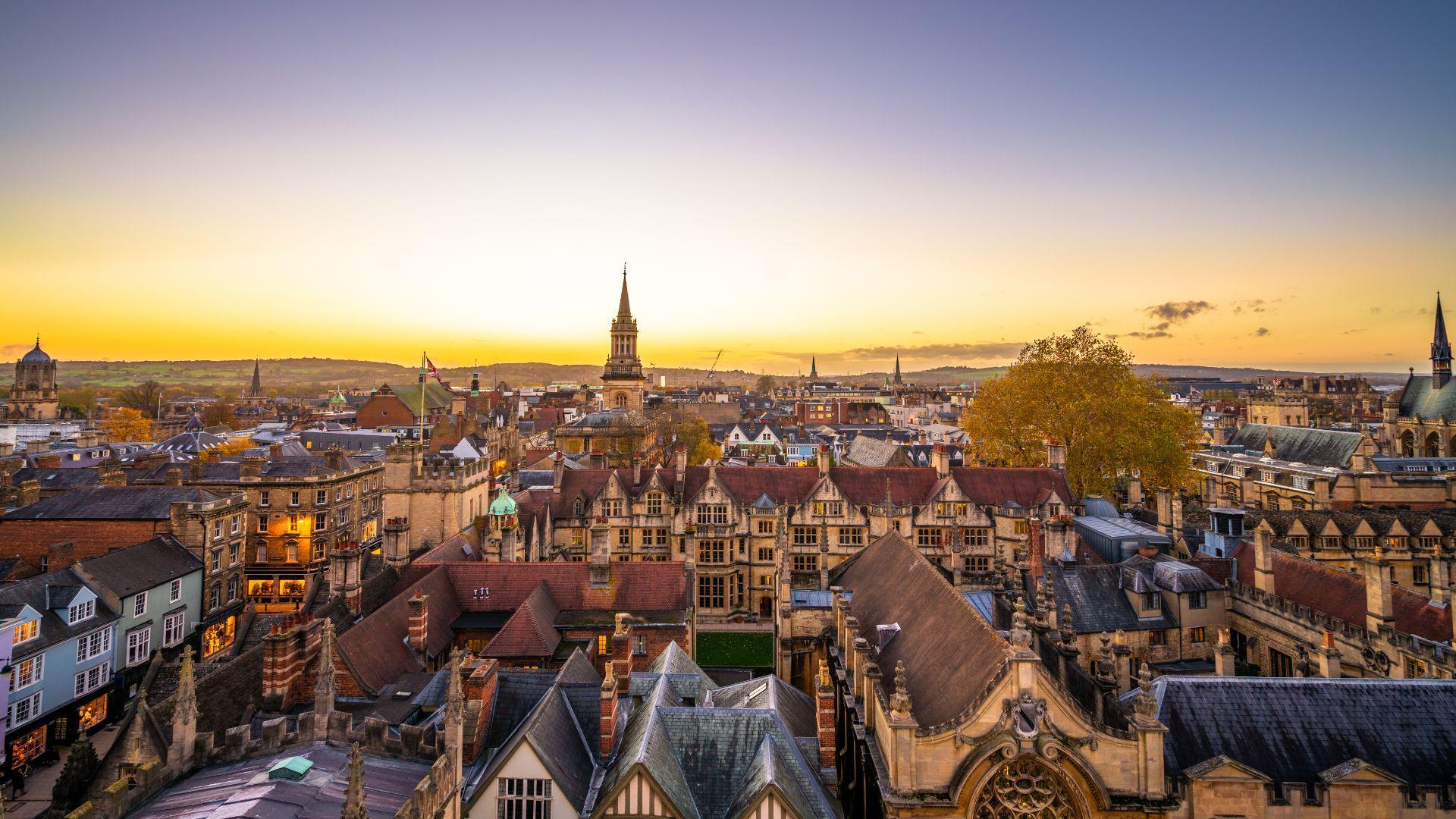
The environment is identified as one of the six themes underpinning the Council’s vision for Oxford in 2042. We agree that Oxford’s environment, particularly its broader landscape setting, is a characteristic feature of the city. Oxford is situated at on the floor of a valley surrounded on all sides by undisrupted green hills, creating the effect of a ‘green bowl’ around the city. This ‘green bowl’ provides the backdrop to historically significant views out from the city and is the reason for the protection of Oxford’s view cones within policy.
Figure 1.2 sets out the underlying objectives associated with each of the six themes and there is no mention of Oxford’s broader landscape setting. The protection of the characteristic landscape setting of the city essential to its semi-rural identity should feature more prominently within the objectives associated with Oxford’s landscape.
We recommend that these objectives are changed to highlight and reflect the significance of Oxford’s wider landscape setting.
Draft Policy S1: Spatial Strategy and Presumption in favour of sustainable development
We support this policy in principle. Whilst the general aims of sustainable development and growth in terms of the delivery of homes, jobs and services are positive, a strategic approach is needed to achieve these aims. This policy touches on a number of key themes without identifying opportunities for growth. We would like to see this policy set out the council’s stance in favour of applications for the change of use from commercial to residential within city and district centres. Promoting development of this type would achieve a number of the aims set out in Draft Policy S1.
We would also support a policy outlining sanctions against the keeping of vacant units, both residential and commercial, within city and district centres. The repopulation or urban centres will have a significant impact on housing need, preventing the further development of Oxford’s green setting.
Draft Policy S2: Design Code and Guidance
We support the reference to the “..wider townscape and landscape” within this policy. We feel that the supporting text could include more detailed information on what this means, and could also include specific reference to the wider green setting of the city. It is also pleasing to see that the supporting guidance in Appendix 1.1 highlights the issue of important views across the city and how these can be both views from the outskirts in towards the historic centre, and those that are from the centre looking out towards the green hills which surround the city.
While we support the general aims of the policy, it does not mention any preference for high quality architecture within the city centre. In a city filled with rich examples of internationally significant architecture, we would like to see the council’s stance in favour of supporting examples of high quality architecture within the city centre set out clearly in policy.
Draft Policy H1: Housing Requirement
Reference should be made within the policy or its supporting text to encourage the conversion of vacant employment uses (offices, retail) into residential use. The delivery of residential units within the city centre and district centres would bring great benefits. More life would be breathed into city streets, such as Cornmarket Street, if there was a mix of residents, workers and tourists.
The preference for mixed use developments should also be mentioned within this policy. While the provision of dwellings is important, to do this successfully within urban centres the activation of ground floor units must be retained. This will help to protect the existing public realm.
Draft Policy H8: Development Involving the loss of dwellings
We support this policy and the contribution it will make towards retaining the existing housing stock.
Draft Policy E5: Tourism and Short Stay Accommodation
Tourism is a significant sector of Oxford’s economy and with it brings its own pressures and problems. It is disappointing to see that there is only one policy within the Local Plan which addresses this issue. Whilst we welcome a policy which seeks to restrict and manage short stay accommodation across the city, there are many other impacts of tourism that need to be managed.
Other issues that the policy (or other standalone policies) should cover include impact of tourism on the city’s historic core, how the public realm could be improved to accommodate large groups, how tourists arrive and depart from the city and how and where coach parking could be provided.
Chapter 4: A Green Biodiverse City that is Resilient to Climate Change
We are very concerned that there is no specific policy relating to the Oxford Green Belt. The protection of the Green Belt, not least for its purpose in protecting the setting of Oxford, is consistent with national policy and this should be provided at a local level too. The Green Belt not only forms part of Oxford’s wider green setting, but also provides protection for a number of ‘green fingers’ which run into the heart of city itself. It is concerning that the Council have not included a specific policy to protect this highly sensitive land.
We own and manage around 1,000 acres of land in and around Oxford, we care for this land on behalf of the public, maintaining it sustainably and providing free access for everyone. We ask that these areas of land, including Wolvercote Lakes, Larkins Lane Field, Marston Fields, be included within the areas identified as Green Infrastructure on the proposed policies map due to the significant contribution they make in terms of fully accessible green space.
Figure 4.2 – Additional considerations for proposals affecting particular types of spaces that would be set out in supporting text to the policy
Reference should be made to other important areas of green space and infrastructure, this should include ancient flood meadows, fen habitats and MG4 grassland.
Draft Policy R2: Embodied Carbon
While we support the requirement that developments larger than 100 dwellings must carry out Whole Life Carbon Assessment, this should apply to development at all scales. Given the sustainable development goals within this plan and the national targets it is important to understand the embodied carbon implications of all development.
This policy should explicitly set out that demolition is a last resort, especially when a building has not exceeded its expected useful life.
We support the general aims within Draft Policy R2 but the council must take a stronger position on sustainable development including embodied carbon in light of the current climate crisis.
Draft Policy HD9: Views and Building Heights
We worked closely with the city council and other specialists to create the ‘Assessment of the Oxford View Cone’ Report in 2015, we strongly support reference to this report within the policy text.
We are also pleased to see that reference is made to the view cones but also the wider setting of the views. This makes it clear that the 10 view cones do not provide a definitive list of all the views, and that the wider setting, or even views that do not fall within the 10 ‘official’ view cones can also be sensitive and warrant a high level of protection.
The policy, or its supporting text, also needs to be clear on the difference between ‘views’ and historic ‘setting’.
Draft Policy C2: Maintaining Vibrant Centres
We support the reference to increased residential development, including upper floors of commercial premises in this policy (part c), we feel this should be echoed in some of the more general housing policies to reinforce the contribution the provision of residential units in the city centre could make toward delivering dwellings in sustainable locations.
We support the reference to public realm in part f), with the Local Plan hopefully working alongside other documents such as the Central Oxford Movement and Placemaking Framework (COMPF) to improve the public realm within the city centre.
Paragraphs 8.9 – 8.10
We support the acknowledgement that this area is adjacent to other urban extension sites in Cherwell District Council and we would urge that on Areas of Focus (AOF) of this scale, the Council works effectively and proactively to ensure there is a joined up approach with neighbouring authorities, to guarantee neighbouring sites work in conjunction with each other and provide the necessary wider infrastructure.
Reference should also be made to the close proximity to the Green Belt to this AOF and the important role it plays in providing a green gap between North Oxford and Kidlington. It should be acknowledged that the green belt needs to remain and be protected to ensure the gap is not lost and the areas of development merge into one another.
Paragraphs 8.17 – 8.19
Development within the West End and the Botley Road needs very careful management to prevent detrimental harm to the views out towards the western hills from the city centre, and views back from the western hills towards the historic city centre. This is a highly sensitive location – with Botley Road sitting within some of the key historic defensive views out from St Georges Tower to the west. More specific reference needs to be made to this to ensure buildings will be limited to appropriate heights.
Green Belt Area of Search
Paragraph 8.26 confirms that a further review of a number of Green Belt sites will be carried out to see if they are suitable for development.
We believe that the protection of the Green Belt should be of highest priority. Not only does it cover a large amount of the green landscape setting around the city, it also provides valuable areas of green space and green ‘fingers’ which penetrate in towards the city centre, providing diverse landscapes and ecology, in addition to a reminder of how the growth of the city historically revolved around these areas of green space.
Previously developed land, brownfield sites and areas of open space which are not covered by the Green Belt designation should be considered first and Green Belt land should be released as a very last resort when no other options can be found.
Proposed Development Site Allocations
463 Ruskin Field - We strongly object to the allocation of Ruskin Field for housing. The development of this site would significantly impact the setting of the Old Headington Conservation Area. The Old Headington Conservation Area Appraisal document (July 2011) highlights that one the of the key positive characteristics of the Conservation Area is the “..small fields cut-off from the wider countryside which provides the rural setting of the village.” Development of this field would completely alter the character and appearance of the wider Conservation Area.
Ruskin Field also abuts Larkins Lane Field and Dunstan Park, both ecologically rich sites and the subjects of ongoing valley fen restoration projects. The development of Ruskin Field would pose a severe threat to the ecological value of these sites. Earlier in our comments we urge the Council to acknowledge the importance of fen habitats and to include them within the Green Infrastructure Network.
665 & 204 Oriel College Sports Ground, Bartlemas and former Bowling Green – Great care needs to be taken with regard to the proposed development of these sites and the potential impacts on the setting of the Bartlemas Conservation Area.
The Bartlemas Conservation Area Appraisal (October 2008) states that the Conservation Area is predominantly rural in character, sitting adjacent to areas of open land. The Conservation Area is one of the hidden treasures of Oxford, described by the Planning Inspectorate in 1986 as a ‘rare and beautiful enclave which much be preserved’. A small stone-built hamlet originally constructed as a leper complex in the outlying fields of east Oxford, is now an area of rural tranquillity which sits at the heart of higher density development.
Should the adjoining sports grounds be allocated for development, detailing guidance should be provided within any relevant policies to ensure that the unique historic character of the Conservation Area is unharmed and unaffected. It should also be made clear that no intensification of traffic along Bartlemas Lane would be acceptable due to the proximity of sensitive historic buildings.
389 Land at Meadow Lane - We object to the allocation of this site. We recognise that this proposed allocation relates to a previously allocated site in the Adopted Local Plan 2036. This is an opportunity to review that allocation based on the availability of additional information regarding its landscape and ecology value. This site is within the G1 Green Infrastructure Network. It is too ecologically sensitive to be developed and serves as an important part of the Green Infrastructure Network.
The site also makes a significant contribution to the wider rural setting of Iffley. The Iffley Conservation Area Appraisal (August 2009) highlights the “predominantly rural quality” of the area and identifies the site as an important area of green space.
008a Bertie Place Recreation Ground – we object to the proposed allocation of this site for housing. Whilst we are aware that the site has previously been allocated for housing, this should not come at the expense of a public playground for children and families. Other sites should be explored which does not result in the loss of a well-used community facility.
616 St Thomas School & Osney Warehouse – we have no in principle objections to the allocation of this site. However the former St Thomas School building is Grade II listed and sufficient weight needs to be given to its retention and preservation within any forthcoming policy text. Built around 1870 the building is a good example of a late 18th-century school building, whilst also providing a remnant of the historical evolution of the evolution of the St Thomas’s parish and those who lived there.
Green Infrastructure Network
112 Marston Gap – We strongly object to the downgrading of the Marston Gap site from Core to Supporting within the Green Infrastructure Network. This site is within the Oxford Green Belt preventing the merging of Marston and Summertown. The gap forms a critical buffer that preserves Old Marston’s distinct rural character. It preserves the ‘village within a city’ character of Marston old village, preventing it being enveloped by development.
It also plays a strategic role in maintaining the openness of one of Oxford’s ‘green lungs’ - the fingers of protected green space reaching in towards the city centre.
The meadows consist of floodplain habitats rich in biodiversity and of high landscape and ecological value.
Both the Old Marston Conservation Area Appraisal (March 2016) and the 2002 Report ‘A Character Assessment of Oxford in its Landscape Setting (Land Use Consultants) highlight the meadows high landscape quality and significance in preserving the green setting on the village and Conservation Area. Development of any kind on this land would be significantly harmful in regard to landscape, heritage and ecology.
Barton Triangle and Larkins Lane Field – We strongly object to the exclusion of Larkins Lane Field and the Barton Triangle from the Green Infrastructure Network. Larkins Lane has a high ecology value and is the subject of an ongoing valley fen restoration project and Barton Triangle is an open green space and visually important element in the setting of Old Headington Conservation Area.
We hope the Council will take the above comments into consideration when progressing with the next stages of the Local Plan.